Articles
ANTONIO JIMÉNEZ, OR THE DREAM OF SOLITUDE
Read more
Articles
By Antonio Soler
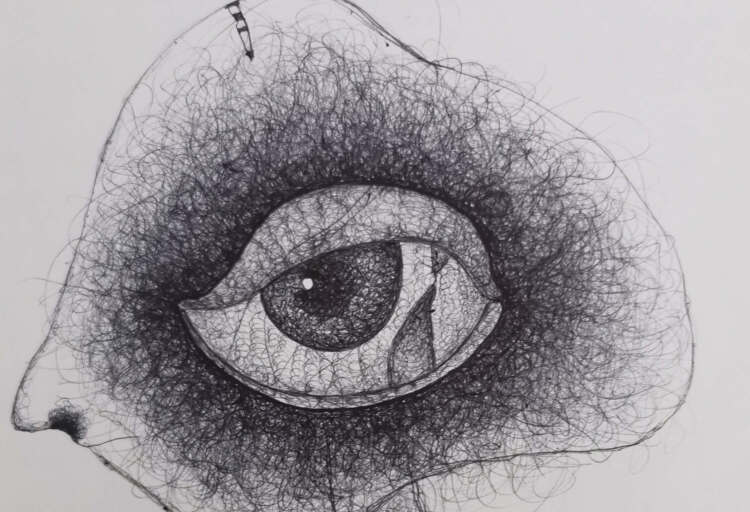
In a photograph—a photograph of a single eye—he has the face of Rembrandt. He has the gaze of Rembrandt in one of his final self-portraits. He has seen creation. The paintings have grown before that gaze. He has been little more than a witness, a medium, or an executor of what others—no one knows who—dictated to him, deeper inside the ear. It is the Antonio Jiménez of the abysses who speaks to the other one, the one who still retains a gesture, a face, a fleeting image of an alert child. He knows that within himself there is more than one voice. He knows that an individual is precisely that: a sum of voices. And he also knows that an artist is the one capable of silencing all voices in order to hear only one when standing before canvas, wood, or paper.
He learned this long ago, looking at himself in the mirror of his paintings. He had no other school. Antonio Jiménez is a child of intuition; that is why mystery is more present in him, more real, than in those who come from books and academies. He is a child of outskirts and beaches who understands the tangled scaffolding of reason at the very moment when colors begin to blend. There everything ends and everything begins. There all logic and arguments are lost. In searching for explanations, threads within the labyrinth, he says that perhaps his work has something to do with that old sailor who worked as a cook on a small fishing boat—his father. There is something magical in the combination of seasonings and colors, in the exploration of flavor and color. But Antonio Jiménez—that child whom the old cook wanted far from that voyage which became the axis of his life. Málaga, Madrid, Paris. Several decades spent before canvases, wood, sand. The one who was not meant to be a sailor has navigated seas far more remote; no one knows whether aboard a skiff, an ocean liner, or a warship. He is carried by an invisible vessel.
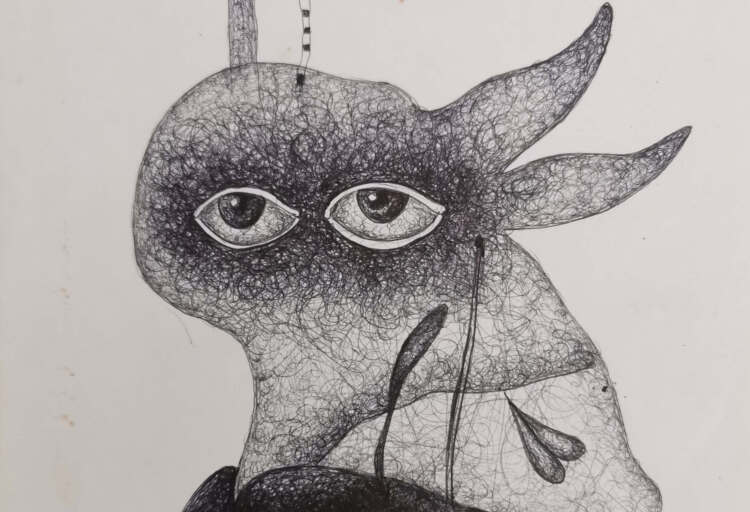
He has portrayed an untold number of monsters, angels, tyrants, jungles, animals, dreams, ghosts, horrors, and fragments of poetry. And all of them are him. The baggage of his soul. That is his story and that is his self-portrait, just as the true self-portrait of Rembrandt is the sum of all his self-portraits and of the lances, brushes, hats, and darkened faces in The Night Watch, in Belshazzar’s Feast, in the portraits of those newly enriched merchants of the Netherlands. The painter’s face is the sum of all his paintings, of the thousands of meters or kilometers painted. Jiménez says he does not know where he found the time, where the years necessary to accomplish so much painstaking work are, when brushstrokes were measured in millimeters. From his studio, from stacks leaning against the wall, from all corners of the world, paintings continue to appear, and he does not know how he could have painted them, or those that now hang from trinkets or pile up against the walls. Always defying logic, arithmetic becomes elusive in his dealings with creation. The entire crew was at the service of a single voice—the voice of a wise captain, of the one who takes command when the painter prevails over all the people who inhabit him.
Excerpt from the catalogue “Jiménez, 2001.”